
Guide to YouTube Likes and Dislikes

What likes and dislikes really tell YouTube

Likes and dislikes are some of the most misunderstood metrics on YouTube.

Many creators obsess over the numbers, celebrating every thumbs up and worrying about every thumbs down. But these signals matter less on their own than you might think.

What really matters is what they reveal about viewer satisfaction and engagement.

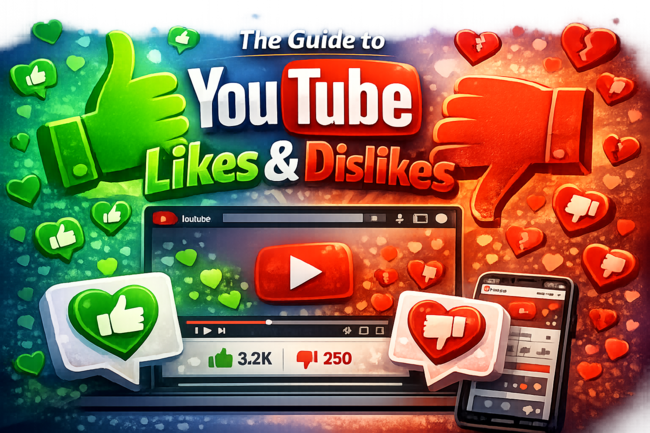
llustration of large green thumbs-up and red thumbs-down icons surrounding a YouTube video player, representing a guide to YouTube likes and dislikes, engagement metrics, and audience feedback.
Vicki

Heading
Do likes and dislikes affect the algorithm?

Body

Likes and dislikes are engagement signals. They indicate that a viewer cared enough to react.

However, they are not a direct ranking switch. A video does not go viral simply because it receives a high number of likes. Likewise, a few dislikes will not destroy performance.

YouTube evaluates satisfaction more broadly. Watch time, retention, and continued viewing carry more weight.

Likes and dislikes contribute to the picture, but they are only part of it.

Heading
What a dislike actually means

Body

A dislike does not automatically mean your video is bad.

It can mean:

  • The viewer disagrees

  • The title promised something different

  • The content was not what they expected

  • The topic is polarising

Dislikes are feedback. They highlight a mismatch between expectation and delivery.

That makes them useful, not dangerous.

Heading
Focus on satisfaction, not vanity metrics

Body

A healthy ratio of likes to dislikes often indicates that your content met expectations.

But satisfaction is deeper than reaction.

Ask yourself:

  • Did viewers watch most of the video?

  • Did they continue to another video?

  • Did they comment or share?

Those signals tell a clearer story about performance than the thumbs alone.

Heading
How to improve your like ratio

Body

If your dislike ratio feels high, look at your packaging first.

Does your title accurately reflect the content?
Does your thumbnail create the right expectation?
Is the opening clear and direct?

Improving clarity and alignment often improves reactions naturally.

You do not need to ask for likes aggressively. You need to deliver value consistently.

Note

Image
Note

Title
A few dislikes are normal

Body

Even highly successful channels receive dislikes. Controversial topics, strong opinions, and fast growth often increase them.

Do not chase perfection. Focus on serving the right audience.

Heading
What you should actually optimise

Body

Instead of obsessing over like counts, focus on:

  • Strong hooks

  • Clear value delivery

  • Tight pacing

  • Relevant recommendations for what to watch next

When those fundamentals are strong, engagement improves naturally.

Likes and dislikes become a reflection of quality, not something you try to manipulate.

Title
Want clearer signals from your content?
Body

TubeSpanner helps you refine titles, structure stronger videos, and align your packaging with audience expectations so engagement improves for the right reasons.